





Cricket bat knocking in is the single most important thing you can do for a new English willow bat. Straight out of the wrapper, the willow is soft. Take it into the nets against a hard ball and it can dent, seam or crack within a few sessions. This guide explains what knocking in does, how to do it yourself, and exactly how our team at VKS prepares every bat we knock in.
Knocking in means striking the face, edges and toe of a new bat over and over, building up the force gradually. Each strike squeezes the willow fibres closer together. Over thousands of strikes, the soft outer layer of the blade becomes a hard, compressed skin.
Willow is pressed at the factory to firm it up, but makers leave some softness because that is where the bat's ping comes from. Knocking in finishes the job. It hardens the surface enough to cope with a cricket ball while keeping the springy wood underneath.
The edges and toe need the most care. They are the thinnest, most exposed parts of the blade, and they take the hardest knocks from edged shots and yorkers. A good knock-in rounds them off slightly, so a mistimed shot glances off instead of splitting the wood.
It protects against cracks
An unprepared face and edges are soft enough to dent and split against a hard leather ball. Knocking in is the best protection you can give a new bat.
It brings out the performance
A well-compressed face is firm and springy. The ball comes off the middle more cleanly, and the bat plays the way it was designed to.
It protects your investment
A good English willow bat is a real purchase. Most makers expect a bat to be properly prepared before hard-ball use, so check the maker's warranty terms.
No amount of knocking in makes a bat unbreakable. Willow is a natural material, and a bat can still be damaged by a poorly timed shot or a very hard new ball. What knocking in does is give the bat the best possible start, so it lasts longer and plays better.
Kashmir willow bats are harder and need far less preparation. Bats used only with a tennis ball or soft ball do not need knocking in at all.
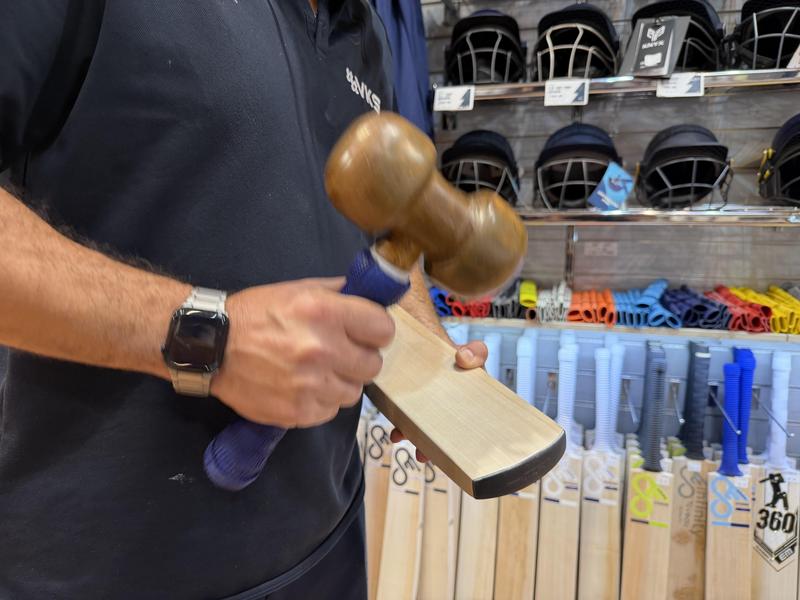
If you want to prepare a bat at home, you need a bat mallet, a little raw linseed oil, an old cricket ball and patience. Plan on around 4 to 6 hours of knocking in, spread over several short sessions.
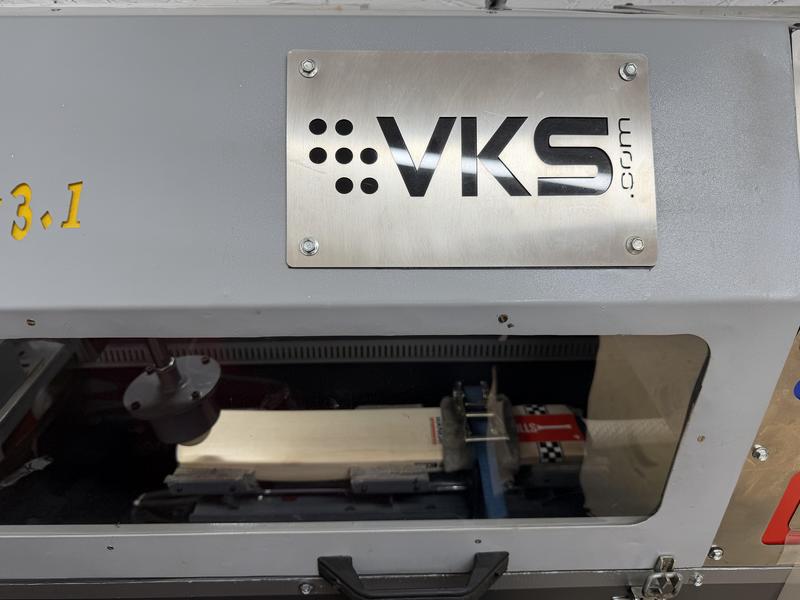
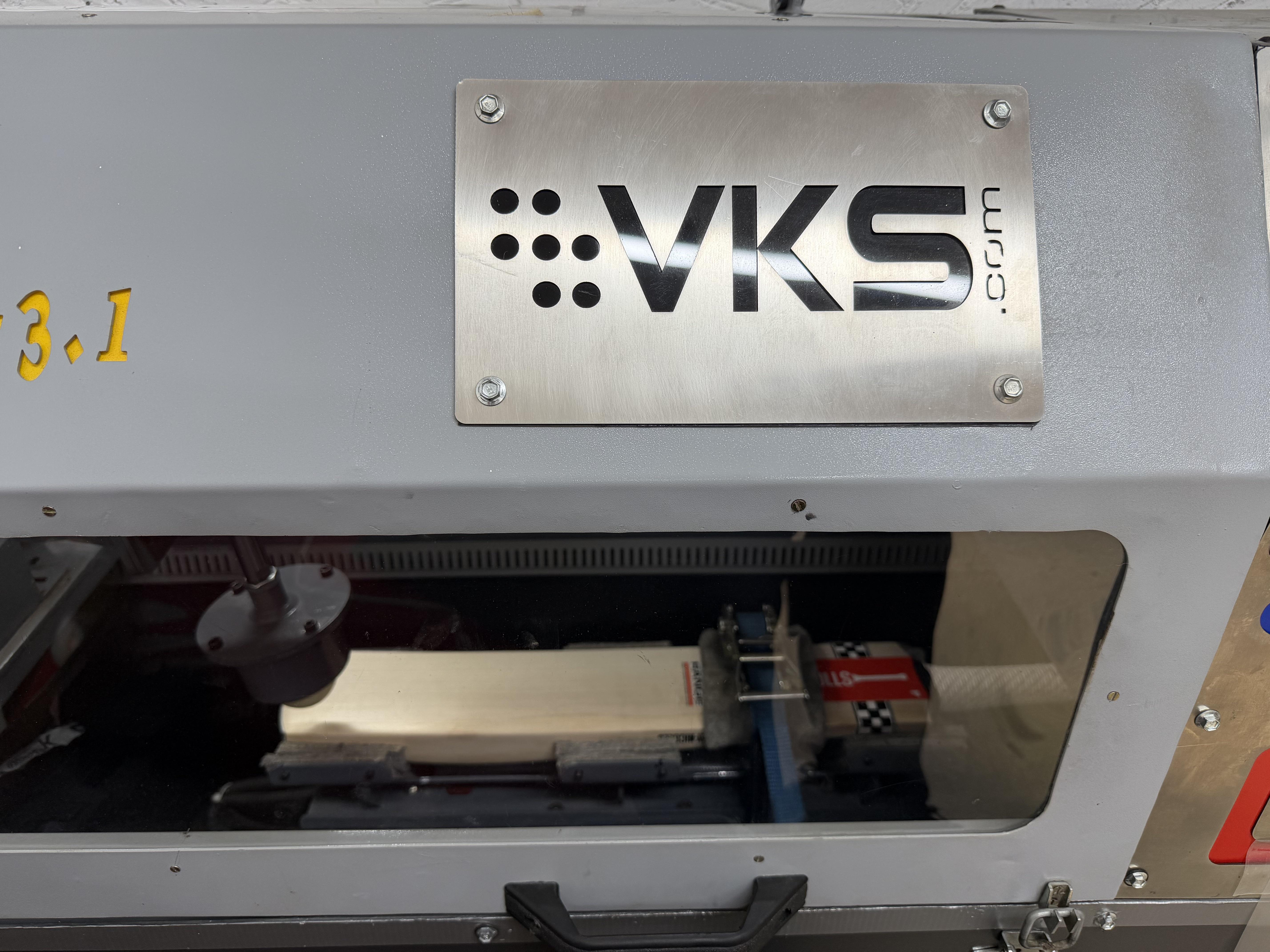
Our knocking-in service combines a machine for the face with traditional hand finishing on the edges and toe. The work is done by bat specialists with more than 50 years of experience preparing cricket bats. Here is what happens to your bat.
| Service | Price |
|---|---|
| Knocking in, bat bought from VKS | £25 |
| Knocking in, bat bought elsewhere | £35 |
| Same-day service (on request) | +£15 |
| Anti-scuff face sheet | +£7 |
| Toe guard (most bats already come with one) | +£12 |
| Extra grip fitting | +£5.99 |
| Spongy grip underlay, fitted free | +£10 |
Normal turnaround is 6 to 7 days in the cricket season and 3 to 5 days out of season. If you need your bat back quickly, ask for our same-day service. You can book knocking in when you buy a bat online, or bring your bat to our Ealing store.
| Knocking in yourself | VKS knocking-in service | |
|---|---|---|
| Time needed | Around 4 to 6 hours of your own time, over several sessions | About 1 hour on the machine plus 30 to 40 minutes by hand, done for you |
| Consistency | Depends on your technique and patience | 10,000 even knocks across the whole face |
| Edges and toe | Easy to strike too hard or square on | Finished by hand by a specialist with 50+ years' experience |
| Oiling | Easy to over-oil or under-oil | Exposed willow oiled and left to dry overnight |
| Cost | A mallet and oil | £25 for VKS bats, £35 for other bats |
Doing it yourself works if you have the time and follow the steps carefully. But most players do not have 4 to 6 spare hours, and the edges are easy to get wrong. A professional knock-in gives an expensive bat the most consistent start.
Many bats are sold as "pre-knocked" or "ready to play". This usually means the face has been pressed or given a short machine run at the factory. It helps, but it rarely covers the edges and toe in enough depth. We recommend extra knocking in for any English willow bat before it is used in a match, even one labelled as pre-prepared.
Knocking in is a job you do once, at the start of a bat's life. After that, a little regular care keeps it in good shape.
Do new cricket bats need knocking in?
Yes. A new English willow bat needs knocking in before it faces a hard leather ball. Knocking in compresses and hardens the soft fibres on the face, edges and toe, so the bat is far less likely to dent or crack in its first few innings.
How long does it take to knock in a cricket bat?
By hand with a mallet, most bats need around 4 to 6 hours of steady work, spread over several sessions. At VKS the bat is oiled and left to dry overnight, then gets about 1 hour on our knocking-in machine and 30 to 40 minutes of hand finishing on the edges and toe.
Do pre-knocked or ready-to-play bats still need knocking in?
Usually, yes. Factory preparation is often a light press or a short machine run on the face. It rarely covers the edges and toe properly, so we still recommend extra knocking in before you use the bat in a match.
Do Kashmir willow bats need knocking in?
Kashmir willow is harder and denser than English willow, so it needs much less preparation. A light session with a mallet and some time with an old ball is normally enough. Bats used only with a soft or tennis ball do not need knocking in.
Should I oil my bat before knocking it in?
Oil any bare, untreated willow lightly before you start, then let it dry fully. A thin coat keeps the fibres supple so they compress rather than crack. Do not over-oil: too much oil makes the willow heavy and soft. Bats with a protective face coating or sheet only need oil on the exposed wood.
How often should I oil my cricket bat?
VKS recommends a light coat of oil on the exposed willow every 4 to 5 months. Knock the bat in properly once, at the start, and book a full refurbishment once the season is over.
How much does the VKS knocking-in service cost?
Knocking in costs £25 for bats bought from VKS and £35 for bats bought elsewhere. Same-day service is available on request for an extra £15. Normal turnaround is 6 to 7 days in the season and 3 to 5 days out of season.
Give your new bat the best start. Add knocking in when you buy your bat online, or bring it to the VKS store in Ealing. Knocking in costs £25 for bats bought from VKS and £35 for other bats, with same-day service available on request.