





A cricket helmet is protective headgear worn by batters and wicket keepers to guard the head, face and neck from a hard ball travelling at high speed. Every helmet on this page is built to the British Safety Standard BS 7928:2013+A1:2019, and is available in steel or titanium grille versions from Masuri, Shrey, GM, Gray-Nicolls and Kookaburra, in both junior and senior sizes.
Choosing the right cricket helmet is one of the most important kit decisions you will make. This guide walks through every brand and model VKS stocks, explains the real difference between steel and titanium grilles, covers junior versus senior helmets, and shows you when to add a stem guard or neck guard. Our staff at 31 Bond Street, Ealing, have been fitting cricket helmets decades, so this guide reflects what we tell customers in store every week.
Safety Standard Explained
Every cricket helmet sold by VKS meets BS 7928:2013+A1:2019, the British Standard for head protectors in cricket. The ICC has required this standard in international cricket since January 2017, and the ECB requires it for all under-18 cricketers batting or wicket keeping in the UK. The standard tests a helmet against a facial contact projectile fired at realistic ball speeds, and checks that the faceguard stops the ball reaching the face. Helmets are tested separately against a senior ball (5.5oz) and a junior ball (4.75oz), so always check which size ball a helmet is rated for before you buy.
Look for the BS 7928:2013+A1:2019 label inside the shell or on the box before you buy any cricket helmet. A helmet without this label should not be worn in club, school or league cricket. Manufacturers recommend replacing a cricket helmet every three years of regular use, or immediately after any significant impact, even if no damage is visible.
Almost every senior helmet in this category comes in two grille options: steel or titanium. Both pass the same safety standard, so the choice comes down to weight, comfort and budget rather than protection level.
| Grille Type | Weight | Price | Best for |
|---|---|---|---|
| Steel | Heavier | Lower cost | Club, school and recreational cricketers who want proven protection at the best value |
| Titanium | Lighter | Higher cost | Serious amateur and elite players who wear a helmet for long innings across a full season |
Steel grilles are heavier but more affordable, and they are what most entry level and grassroots cricketers wear, including juniors. Titanium grilles cost more but reduce the weight on your head and neck, which matters most if you bat for long periods or field close to the bat in a helmet. If you are a club or local league player, a steel grille gives you the same safety standard for less money. If you play regularly at a higher standard, the titanium versions from Masuri, Shrey and GM are worth the upgrade.
VKS stocks cricket helmets from five leading brands: Masuri, Shrey, GM, Gray-Nicolls and Kookaburra. Each brand structures its range differently, so here is what separates each model.
Masuri is the official helmet safety partner to a number of international and domestic cricket teams, and every helmet uses Masuri's Single Shell Protection system with an air flow cooling system built in. The range runs from the C-Line through to the TrueFit 3D, so there is a Masuri helmet for every playing level and budget.
| Model | Grille | Price from | Best for |
|---|---|---|---|
| C Line | Steel | £49.99 (Junior) / £59.99 | Club, school and recreational cricketers wanting an affordable, certified helmet |
| T Line | Steel or Titanium | £79.99 (Junior Steel) to £149.99 (Titanium) | Traditional cloth covered helmet for players who want a classic look with modern protection |
| T Line Plus | Steel or Titanium | £84.99 (Junior Steel) to £159.99 (Titanium) | A matte finish upgrade on the T Line shell for club and county level cricketers |
| E Line | Steel or Titanium | £174.99 to £189.99 | Serious and advanced cricketers, featuring the patented Eye-Line Grille for added facial protection |
| E Line Plus | Titanium | £194.99 | Worn by international players, Masuri's most premium standard helmet |
| TrueFit 3D | Steel or Titanium | £189.99 to £199.99 | Players who want the most advanced fit, using 3D printed lattice padding |
Independent testing by INSPEC International has confirmed Masuri helmets perform well beyond the minimum requirement of BS 7928:2013+A1:2019, and the brand also stocks a dedicated T-Line Steel Wicket Keeping helmet built for players standing up to the stumps.
Shrey gives you a clear path from an affordable steel helmet through to an ultra light titanium model, and two of its top helmets now come with a free neck guard in the box.
| Model | Grille | Price from | Best for |
|---|---|---|---|
| Classic 2.0 Steel | Steel | £39.99 (Junior) / £47.99 | First helmet for junior and entry level senior cricketers |
| Performance Steel | Steel | £49.99 (Junior) / £54.99 | Lightweight everyday match helmet for club and school cricketers, around 940g |
| Masterclass 2.0 Air Steel | Steel | £99.99 | Competitive players who want a steel grille with a more advanced shell |
| Masterclass Air 2.0 Titanium | Titanium | £159.99 (free neck guard included) | Advanced and professional players wanting the lightest possible feel |
| Elite Pro Titanium | Titanium | £139.99 (free neck guard included) | Top of the Shrey range, with a compact pro-style visor and replaceable ear guards |
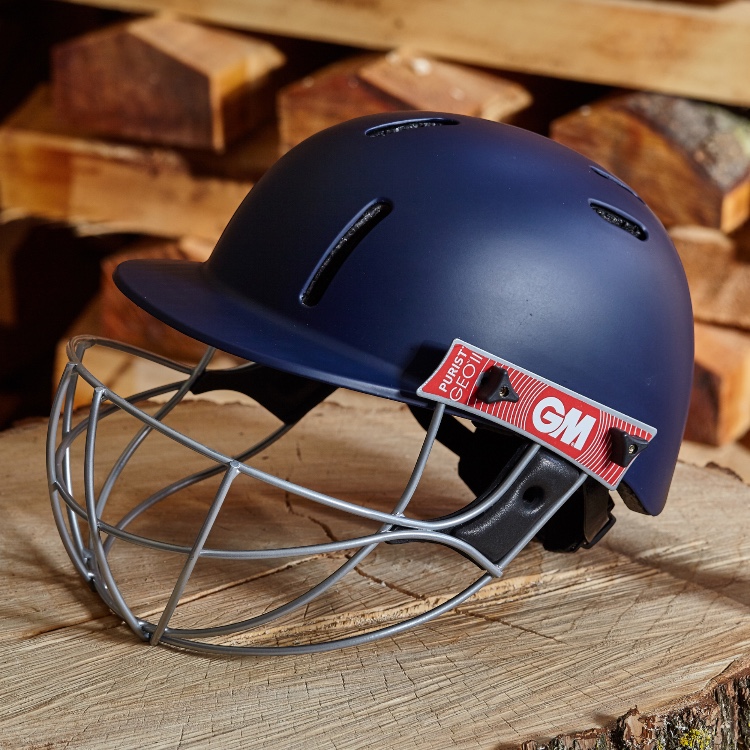
GM offers a straightforward choice between the entry level Purist Geo and Maestro Steel helmets, and the Maestro Titanium for players who want a lighter grille without changing brand.
| Model | Grille | Price from | Best for |
|---|---|---|---|
| Maestro Junior | Steel | £47.99 | Young players needing a certified, affordable first helmet |
| Purist Geo Senior | Steel | £54.99 | Club cricketers on a budget |
| Maestro Senior | Steel | £54.99 | Regular club players wanting GM's core protection |
| Maestro Titanium Senior | Titanium | £159.99 | Higher standard players wanting a lighter GM helmet |
Gray-Nicolls is worn by a number of international batters and keeps its helmet range simple: the Atomic 360 and Ultimate 360 for senior players, and the Elite for juniors, all built around 360 degree coverage of the head and face.
| Model | Price from | Best for |
|---|---|---|
| Atomic 360 | From £47.99 | Budget conscious club cricketers |
| Ultimate 360 | £67.99 | Club and school cricketers wanting Gray-Nicolls's core protection |
| Elite (Junior) | £39.99 | Junior cricketers needing a certified first helmet |
Kookaburra keeps its helmet range focused on one dependable model, the Pro 600, offered in both junior and senior sizes, alongside a matching neck guard.
| Model | Price from | Best for |
|---|---|---|
| Pro 600 Junior | £44.99 | Junior cricketers wanting a simple, certified helmet |
| Pro 600 | £49.99 | Senior club cricketers wanting dependable, no-frills protection |
UK Requirement for Under 18s
In UK cricket, it is a compulsory requirement for under-18 cricketers to wear a certified cricket helmet when batting or wicket keeping, in both matches and net sessions. Junior helmets are tested separately against the smaller 4.75oz junior cricket ball, so always choose a helmet labelled for junior use rather than a small adult size.
VKS stocks junior cricket helmets from Masuri, Shrey, GM, Gray-Nicolls and Kookaburra, sized from around 51cm up to 57cm head circumference. Senior helmets at VKS run from a Small Adult size around 57cm through to a 2XL around 64cm, so nearly every head shape and size is covered. Junior helmets are lighter overall and shaped for a smaller head, rather than simply being a scaled down adult shell.
A stem guard, also called a neck guard, is a clip-on pad that attaches to the back of a cricket helmet to protect the base of the skull and upper neck from a rising delivery. Neck guards became far more common across professional and club cricket after a high profile on-field neck injury in 2014 prompted brands including Masuri to develop dedicated protection for this area. Cricket Australia has since made neck protectors mandatory for batters facing fast or medium pace bowling in its managed competitions.
A stem guard only fits the helmet brand it is made for.
A Masuri stem guard will only fit a Masuri helmet, and a Kookaburra neck guard will only fit a Kookaburra helmet, so always match the guard to your helmet brand and model.
| Stem Guard / Neck Guard | Fits | Price |
|---|---|---|
| Masuri Stem Guard (Elite / Test / C-Line) Senior | Masuri senior helmets | £39.99 |
| Masuri Stem Guard Lite 2.0 Junior | Masuri junior helmets | £24.99 |
| Shrey Neck Guard | Shrey helmets | £29.99 |
| GM Maestro Neck Protect | GM Maestro helmets | £26.99 |
| Kookaburra Pro Neck Guard | Kookaburra Pro 600 helmets | £17.99 |
Note that the Shrey Masterclass Air 2.0 Titanium and Shrey Elite Pro Titanium helmets already include a free neck guard in the box, so you will not need to buy one separately for these two models.
Budget: Under £70
Kookaburra Pro 600, Gray-Nicolls Atomic 360, GM Purist Geo, Masuri C Line, and every junior steel helmet from Shrey and GM. All fully BS 7928:2013+A1:2019 compliant.
Mid-range: £70 to £150
Masuri T Line and T Line Plus steel and titanium models, Shrey Masterclass 2.0 Air Steel, and entry titanium options for players moving up a level.
Premium: £150+
Masuri E Line, E Line Plus and TrueFit 3D, Shrey Masterclass Air 2.0 and Elite Pro Titanium, and the GM Maestro Titanium. The lightest helmets for serious and advanced cricketers.
For club and school cricketers, a steel grille helmet from Masuri's C Line, Shrey's Performance range, GM's Purist Geo or Kookaburra's Pro 600 gives full BS 7928:2013+A1:2019 protection at a sensible price. Players batting regularly through a full season, or facing quicker bowling, get real benefit from stepping up to a titanium grille, where the reduced weight makes a noticeable difference over a long innings. Whichever helmet you choose, add a matching stem guard if you regularly face fast or short pitched bowling.
Our team at 31 Bond Street, Ealing has been fitting cricket helmets for club, school and representative players for over 50 years, and we recommend trying a helmet on in store wherever possible, since fit varies noticeably between brands even at the same stated size.
Is it compulsory to wear a cricket helmet?
It is compulsory for under-18 cricketers in the UK to wear a certified helmet when batting or wicket keeping. It is not compulsory for adults over 18, though it is strongly recommended and almost universal against pace bowling. Any helmet worn must meet BS 7928:2013+A1:2019.
What is the difference between a steel and titanium cricket helmet?
Both grille types meet the same BS 7928:2013+A1:2019 safety standard. Steel grilles are heavier and more affordable, while titanium grilles are noticeably lighter and cost more. The choice comes down to comfort and budget, not safety level.
Can I use a stem guard from any brand on my helmet?
No, a stem guard only fits the brand and model it was designed for. A Masuri stem guard will not fit a Shrey or Kookaburra helmet. Always check the compatible model before buying a stem guard or neck guard.
Does a junior cricket helmet fit a small adult?
Not always. Junior helmets are tested against a smaller 4.75oz ball and shaped for a junior head, while small adult helmets are tested against the senior ball. If in doubt, measure your head circumference and check it against the specific model's size chart, or ask our team in store.
How often should I replace my cricket helmet?
Manufacturers recommend replacing a cricket helmet every three years of regular use. Replace it immediately after any significant impact, even if there is no visible damage, since the internal structure may already be compromised.
Should I buy a stem guard with my cricket helmet?
Yes, if you regularly face fast or short pitched bowling. A stem guard protects the base of the skull and upper neck, an area not covered by the helmet shell itself. Two Shrey titanium models come with one included free.
Which cricket helmet brand should I choose?
Masuri, Shrey, GM, Gray-Nicolls and Kookaburra all meet the same BS 7928:2013+A1:2019 standard, so the choice often comes down to fit and preferred style. Masuri and Shrey offer the widest range of steel and titanium options across every budget, while Gray-Nicolls and Kookaburra keep things simple with fewer, dependable models.