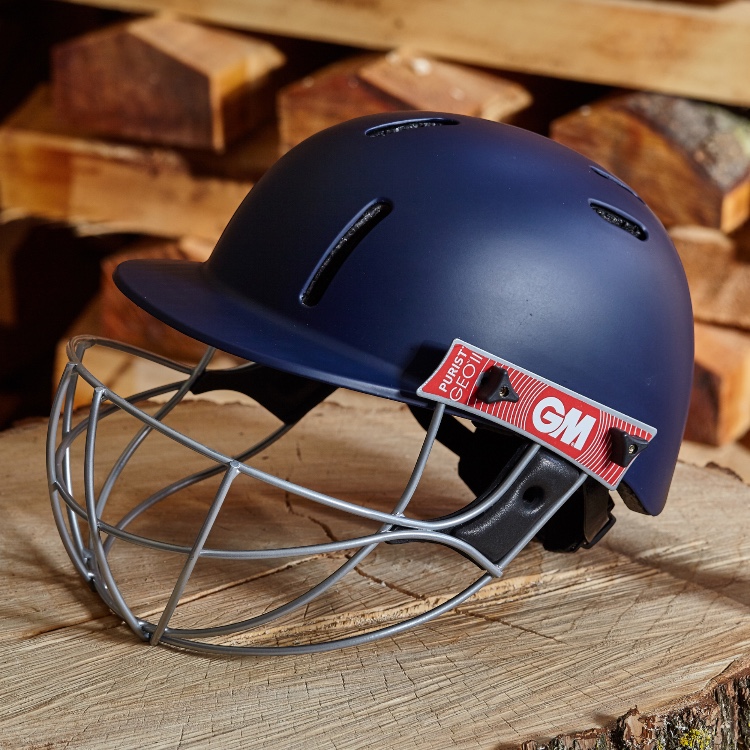






Cricket has always been a game of skill, courage, and fine margins. As the game has evolved, so too has the speed and aggression with which it is played. With faster bowlers, more powerful bats, and busier fixture lists, player safety has rightly become a central focus - and at the heart of that conversation are cricket helmets.
Today, parents, coaches, and players at every level are far more aware of the risks of head and neck injuries. The very sad incidents in Australia a few years ago, and then again as recently as last month, have brought home just how vital it is to wear a correctly fitted, modern helmet - often with additional cricket helmet neck guards - that meets the latest safety standards.
In this article, we look at how helmets have evolved, what modern safety standards require, why British Standard (BS) approval is so important, and how to choose the best cricket helmets UK players can rely on.
In the early days of cricket, protective equipment was minimal. Batters typically wore nothing more than a cap or sunhat. Even when fast bowling became more hostile, many players resisted helmets, seeing them as a sign of weakness.
Helmets began to appear more regularly in the 1970s and 1980s, often improvised from motorcycle helmets or basic hard shells with simple face grills. They were a big step forward, but they lacked the rigorous testing and design refinements we now take for granted.
Over the last few decades, several key developments have transformed cricket helmets:
The cricket ball is hard, heavy, and can easily exceed 80-90mph at higher levels. Even at junior and club standard, a mistimed pull shot or a ball that climbs unexpectedly can cause serious harm.
Helmets are designed to protect against:
The tragic incidents in Australia highlighted another vulnerable area: the back of the head and neck. These rare but devastating injuries have led to a surge in demand for cricket helmet neck guards, especially from parents buying for their children.
Neck guards (or stem guards) are designed to protect the area at the base of the skull and the upper neck - places that a traditional helmet shell and grill do not fully cover.
There are two main approaches:
Following the highprofile incidents in Australia and the more recent incident last month, more parents and players are insisting on helmets that either:
This is especially important for junior players, who may be less experienced against shortpitched bowling and more likely to misjudge the bounce of the ball.
In the UK, the law is very clear: any cricket helmet sold must be BS approved. That means it has passed the relevant British Standard tests for impact protection, grill spacing, retention, and overall construction.
This is not just a technicality. BS approval is what gives players, parents, and coaches confidence that a helmet has been rigorously tested to cope with the kinds of impacts that can occur in real match situations.
When you are looking for the best cricket helmets UK players can buy, BS approval should be nonnegotiable.
Some reputable brands manufacture different models for different markets, each built to meet local regulations. A helmet that is perfectly legal and common in one country may not meet the stricter requirements in another.
For example:
Unfortunately, some online sellers have imported these nonUK models without the manufacturer's consent and are offering them for sale to UK customers. While they may look similar to UKapproved versions, they do not meet British Standard requirements and therefore should not be used in UK cricket.
This is why it is so important to:
To ensure you are buying a helmet that meets UK safety standards, it is wise to stick with established manufacturers who produce BSapproved models specifically for this market.
Key brands include:
These brands invest heavily in research, testing, and continuous improvement. Their UKapproved helmets are designed to work in harmony with compatible cricket helmet neck guards, giving players a complete protection system that covers the head, face, and neck.
Some shops in the UK have, unfortunately, been offering for sale cricket helmets that are not British Standard approved. This creates several serious risks:
Just because a helmet carries a famous logo does not mean it is safe or legal for use in the UK. Always verify that the specific model you are buying is BS approved and sourced through official UK channels.
Even the safest helmet can only do its job properly if it fits correctly. All modern cricket helmets are available in a range of sizes, often with adjustable systems to finetune the fit.
A correctly fitted helmet should:
For junior players in particular, professional fitting is invaluable. Children's heads grow quickly, and parents may be tempted to buy a helmet "to grow into". However, a helmet that is too large can move around, exposing vulnerable areas and reducing protection.
At a specialist cricket store, trained staff can:
With so many options available online, it can be tempting to choose the cheapest helmet or the one with the flashiest branding. But when it comes to head and neck protection, expert guidance is crucial.
Buying from a reputed cricket specialist store means:
Our own team is fully trained to ensure that your child's helmet fits correctly. We take the time to explain the features, check the fit, and make sure that both player and parent feel confident before leaving the store.
When selecting a new helmet, it helps to work through a simple checklist:
By following these steps and seeking expert help, you can be confident that you are choosing from the best cricket helmets UK players can buy - not just in terms of comfort and style, but, most importantly, in terms of safety.
The evolution of cricket helmets has been driven by a simple but vital goal: to keep players safe while they enjoy the game they love. Modern designs, strict UK safety standards, and the introduction of cricket helmet neck guards have all contributed to a much higher level of protection than ever before.
However, equipment is only as effective as the choices we make. That means:
With the right helmet, correctly fitted and properly maintained, players can step out to bat with greater confidence - and parents can have the reassurance that every reasonable step has been taken to protect their children on the field.